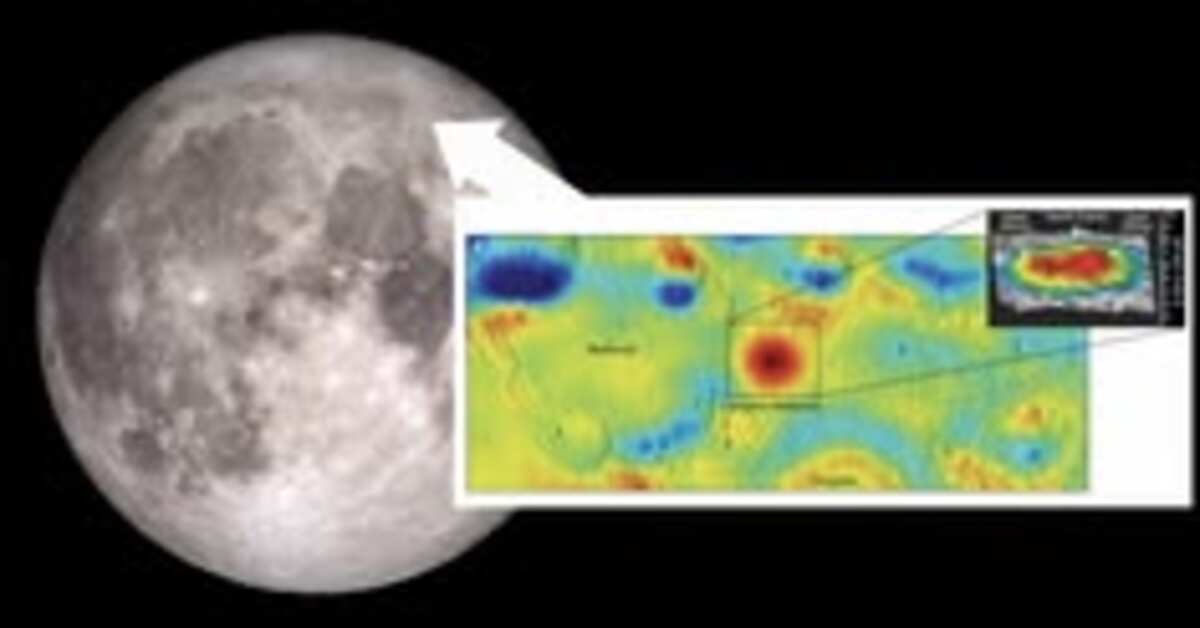
Astronomers and space enthusiasts are buzzing over a dramatic new mark on the lunar surface: a fresh impact crater that has left a strikingly bright scar easily noticeable even from Earth. NASA’s Lunar Reconnaissance Orbiter (LRO) recently identified the new feature through detailed before-and-after image comparisons, revealing how a space rock slammed into the Moon and blasted bright material outward in a dramatic sunburst pattern.
The impact created a crater approximately 22 meters wide, roughly the size of a large house. While modest in diameter, the real spectacle lies in its fresh ejecta rays. The collision excavated and hurled lighter-colored subsurface material tens of meters across the surrounding darker lunar regolith. These bright streaks spread outward like rays from a sun, making the site stand out sharply against the Moon’s ancient, weathered terrain. Scientists describe it as a “new freckle” on the familiar face of the Moon, visible in high-resolution orbital imagery released in early April 2026.
This discovery highlights that asteroid and meteoroid impacts continue to reshape the Moon’s surface in real time. Because the Moon lacks an atmosphere to burn up incoming objects, even small rocks strike at full cosmic speed, creating permanent scars that can persist for millions of years. The bright rays result from freshly exposed material that has not yet been darkened by solar radiation and micrometeorite gardening over time.
Planetary scientists spotted the crater by systematically comparing recent LRO images with older ones taken years earlier. The contrast was unmistakable. The new scar formed sometime after the previous imaging pass, confirming it as a genuinely recent event. While the exact date of the impact remains uncertain, the freshness of the rays suggests it happened within the last few years, possibly even more recently than initial estimates.
For skywatchers on Earth, the news adds excitement to lunar observing sessions. Under good conditions with a telescope or powerful binoculars, the bright ejecta field may be detectable near the impact site, especially when the Moon is at a favorable phase with strong illumination angles. Amateur astronomers are already scanning the lunar surface for this new landmark, turning routine Moon-gazing into a hunt for cosmic fresh evidence.
The finding carries scientific importance beyond visual appeal. Each new crater provides valuable data on the current rate of impacts in the Earth-Moon system. Understanding these frequencies helps refine models for planetary defense and assesses risks for future lunar missions and habitats. As NASA prepares for Artemis crewed returns and long-term bases, knowing how often the surface gets pelted by space debris becomes critical for site selection and shielding design.
This bright new scar joins a small but growing catalog of “fresh” lunar craters documented by the LRO since its arrival in 2009. Earlier examples were smaller, but each one adds to the picture of an active Moon still evolving under constant bombardment. The rays will gradually fade over centuries as dust and radiation darken the material, but for now, they offer a rare, vivid snapshot of the Moon’s violent past and present.
The discovery has sparked renewed public interest in our closest celestial neighbor. With clearer images circulating online and in scientific publications, many are looking up at the Moon with fresh eyes, wondering about the unseen impacts happening right now. As lunar exploration accelerates in the coming years, catching these rare events in near real-time will become increasingly common thanks to orbiting cameras and ground-based monitoring.
For now, the bright scar serves as a striking reminder that the Moon is not a static relic but a dynamic world still feeling the effects of the solar system’s debris. Whether spotted through a backyard telescope or studied in detailed NASA imagery, this new lunar mark invites everyone to appreciate the ongoing cosmic drama playing out overhead.